
Printed circuit board assembly services support
Printed circuit board (PCB) assembly services are at the forefront of supporting augmented reality (AR) applications, facilitating the seamless integration of hardware components that power immersive digital experiences. Augmented reality, which overlays digital content onto the real world, relies on sophisticated electronics to process data, generate graphics, and interact with users in real-time. PCB assembly services play a crucial role in manufacturing the circuitry that enables AR devices to function reliably and deliver immersive experiences to users.
One way in which PCB assembly services support augmented reality applications is by providing the necessary hardware infrastructure for AR devices. AR headsets, glasses, and smart devices require a complex array of electronic components, including processors, memory modules, sensors, and display panels, all integrated into compact and lightweight form factors. PCB assembly services specialize in fabricating and assembling these intricate electronic circuits, ensuring that the hardware components are seamlessly integrated and optimized for performance, power efficiency, and thermal management.
Moreover, printed circuit board assembly services enable the miniaturization and customization of electronic components, which is essential for AR devices to be compact, lightweight, and ergonomic. As AR technology continues to evolve, there is a growing demand for smaller, more powerful, and energy-efficient hardware solutions that can deliver immersive experiences without compromising comfort or mobility. PCB assembly services leverage advanced manufacturing techniques and materials to produce high-density circuit boards with miniaturized components, enabling manufacturers to design sleek and wearable AR devices that offer a compelling user experience.
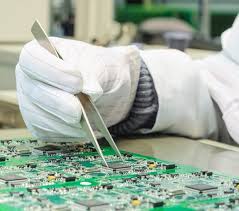
Printed circuit board assembly services support augmented reality applications
Another key aspect of PCB assembly services in supporting augmented reality applications is the integration of sensors and connectivity features. AR devices rely on a variety of sensors, such as cameras, accelerometers, gyroscopes, and GPS modules, to track motion, detect gestures, and perceive the user’s environment. PCB assembly services specialize in integrating these sensors into the device architecture, ensuring accurate and responsive tracking capabilities that enhance the immersion and interactivity of AR experiences. Additionally, PCB assembly services facilitate the integration of wireless connectivity technologies, such as Wi-Fi, Bluetooth, and cellular connectivity, enabling AR devices to communicate with other devices and access cloud-based services for content delivery and real-time updates.
Furthermore, PCB assembly services contribute to the development of AR applications by providing prototyping and iteration support. The iterative nature of AR development requires rapid prototyping and testing of hardware prototypes to validate design concepts, assess performance, and gather user feedback. PCB assembly services offer quick turnaround times for prototype PCBs, allowing developers to iterate designs iteratively and accelerate the development cycle of AR devices and applications. By partnering with PCB assembly services, AR developers can bring their ideas to life faster and more cost-effectively, enabling them to stay ahead of the curve in this rapidly evolving industry.
In conclusion, printed circuit board assembly services are instrumental in supporting augmented reality applications, providing the hardware infrastructure, miniaturization capabilities, sensor integration, and prototyping support needed to drive innovation and deliver immersive AR experiences. As AR technology continues to gain traction across various industries, from gaming and entertainment to education and enterprise, PCB assembly services will play a vital role in shaping the future of augmented reality and unlocking new possibilities for interactive and immersive computing experiences.


