
Components of PCB Assembly and Manufacturing
A printed circuit board (PCB) is the central component in electronic products that are designed to transmit signals from one side of a circuit board to another. The components on a PCB are connected to each other by copper pathways known as traces and soldering joints. These connections are vital to the functioning of the finished product, so it is important that the traces and solder joints are made correctly.
There are many factors to consider when assembling a pcb assembly and manufacturing, including the layout of the components, their electrical and mechanical properties, and their compatibility with the intended function of the PCB. It is also important to evaluate the reliability of the components to ensure their long-term performance and durability.
The first step in PCB assembly is to prepare the board’s substrate, which is typically a rigid material like fiberglass, otherwise designated as “FR-4.” In addition to providing structural strength and thickness, this material helps to transfer electricity from one layer of the PCB to the next via copper layers. The etching process then removes the areas of the copper layer that are not protected by the design transferred to the substrate, leaving behind traces that connect the various components on the circuit board.
After the etching process, holes are drilled at the correct locations on the PCB to allow for component mounting. These holes are then plated with copper to provide robust, high-speed electrical connections between the components. Finally, a layer of solder mask is applied to the substrate’s surface, which creates a non-conductive region and isolating the traces of copper from each other to limit the likelihood of short-circuiting.
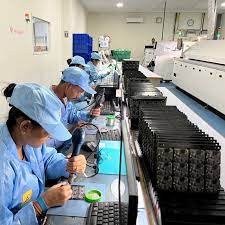
Key Components of PCB Assembly and Manufacturing
As the assembly process continues, surface-mount components are asembled on to the PCB using a process called Surface Mount Technology (SMT). This method uses an automated machine that places individual SMD components on to the circuit board with extreme accuracy. Compared to the Thru-Hole Technology (THT) assembly method, this is a much more efficient technique for low- and medium-volume production of PCBs.
When assembling PTH components, it is important to check that the polarity of each component is correct (for example, the direction of the cathode and anode terminals on capacitors). It is also important to verify that there are enough copper pads to accommodate each component’s size and current-handling capabilities.
It is also important to clean the circuit board after each stage of semblance. This is because flux residue left behind from the soldering process can be abrasive and damage the solder joints over time. In addition, human handling tends to transfer oils and dirt from fingers and clothing to the surfaces of the PCB. This can cause oxidation, which can result in poor connectivity between components and a dingy appearance. In the end, it is important to thoroughly wash and dry the circuit board before shipping it to customers. This will help ensure that the finished product functions properly and looks its best. Additionally, it will help protect against damage from physical stress, which can be caused by shocks and vibrations during shipping.


